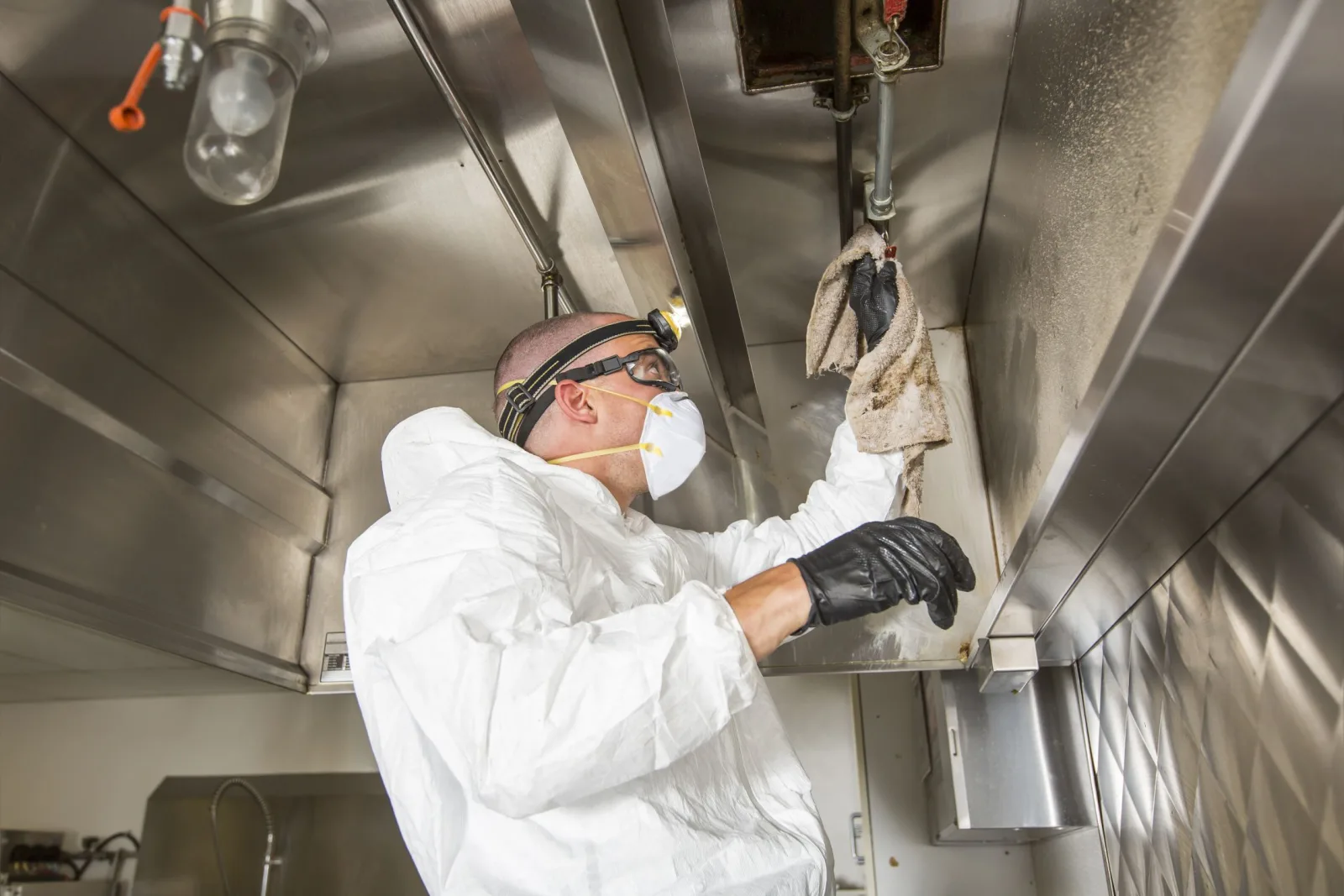
Start with the scope, then compare the price.
A commercial hood-cleaning quote starts with the equipment and access, not the restaurant’s seat count. One long canopy over a busy cooking line may need different work from two smaller hoods. Grease accumulation, filter condition and safe access to the exhaust path all affect the job.
Published starting prices are $385 CAD for a single hood and $725 CAD for a multi-hood setup. The final quote should identify what is included and what would require separate approval. Ask whether taxes, difficult access or extra equipment change the price before accepting it.
| Compare these details | What to ask |
|---|---|
| Hood and filters | Which surfaces and removable filters are included? |
| Duct and fan | Which components can be reached and cleaned? |
| Records | What photographs and service documentation will be supplied? |
| Access | Who arranges roof access and unlocks service areas? |
Know what sits above the cooking line.
A canopy collects the vapour and grease produced by cooking. Filters capture part of that grease, while the exhaust system carries air away from the kitchen. That connected path is why cleaning the visible front edge alone is not the same as a defined commercial hood-cleaning service.
Before booking, identify every hood involved. Mention any separate prep-area hood, unusual filter sizes or areas your staff cannot safely access. Photographs can make the initial conversation more useful, but they cannot reveal every hidden section of ductwork. The provider may need further information or a site assessment.
For a closer look at the route above the ceiling and out to the fan, read the kitchen exhaust cleaning page. The two services overlap; the written scope determines how the work is packaged for your premises.
Prepare the line without creating another job for your staff.
Ask for the preparation instructions before the appointment. The kitchen may need food and loose items moved, equipment cooled and access cleared. Follow the provider’s instructions for shutdown and isolation rather than assuming that switching off one wall control makes the entire system safe.
Assign one person to open the premises and explain any alarm or door arrangements through an appropriate private channel. Do not put alarm codes in the initial quote form. If staff need to return at a fixed time, make that a booking condition so the available work window is understood.
A restaurant in Downtown Oakville may share a rear entrance; a location in Glen Abbey may rely on a property manager for rooftop access. These are details to confirm for your building, not assumptions about every restaurant in the neighbourhood.
Separate routine staff cleaning from exhaust maintenance.
Routine cleaning keeps the working kitchen manageable between service visits. Staff can follow their established procedures for surfaces and removable components. That routine does not replace specialist access to the exhaust system or demonstrate that inaccessible areas are free of grease.
Do not ask kitchen staff to climb onto the roof, dismantle a fan or disturb fire-protection equipment to prepare for a visit. Tell the quote team about the equipment and let the responsible provider identify the safe work requirements. Repairs and installation work require their own assessment and are not included merely because cleaning is booked.
Keep the record with the people responsible for the kitchen.
Request a service record that identifies the date, premises, work completed and any areas that were inaccessible. The service standard also includes before-and-after photographs and access to WSIB and liability documentation before work. Ask for the current documents for the provider assigned to your job.
Managers in Kerr Village, Bronte Village and elsewhere in Oakville face the same practical handover problem: records can disappear when responsibility changes. Keep a copy where the owner or next manager can find it. Use the NFPA 96 guide to frame questions about maintenance records, without treating a cleaning certificate as a fire inspection.
Choose the next visit using the kitchen’s actual workload.
A heavily used fryer line does not produce the same conditions as occasional cooking. Discuss your cooking methods, service hours and previous reports with the cleaning provider. A date on the calendar is useful only when it reflects how the system is used and the requirements applicable to it.
The Oakville Fire Department is the municipal fire-safety contact. Questions about an inspection or applicable requirements should go to the appropriate authority. For the service scope and an appointment request, use the Oakville quote page.